腸絨毛と細菌


腸内微生物叢
消化管は、環境と接触する体表面の最大面積を占めています。1腸管の役割は、消化という枠を超えて広い範囲にわたっています。
消化管(腸)は、食物消化と栄養吸収の中心であるだけでなく、ペットの健康全般についても主要な役割を果たしています。
腸内微生物叢の既知の機能としては、次のようなものがあります。2,3
- エネルギー源として食物を摂取する
- 発酵と代謝を通して身体に栄養を供給する
- 食物繊維を粉砕する
- 免疫系を発達させ、ホメオスタシスを維持する
- 多糖類とビタミン類を処理する
- ホルモンを産生する
- 腸管内病原菌から身体を防御する
腸は、細菌、その他の原生動物、古細菌、ウイルス、真菌など、数百もの異なる微生物種の生息地となっています。
腸内に生息する微生物の数は、兆の単位にのぼります。少なくとも身体全体の細胞数と同数の微生物細胞が腸内に存在します。4現在の文献では、1010~1014 個の微生物細胞があると推定されています。2これらの寄生微生物(または共生細菌)は、エネルギー調節、ミネラル吸収、ビタミン合成、腸バリア機能、免疫システムの機能において役割を果たしています。また、病原菌に対するバリアを形成し、腸への栄養補給を助けています。
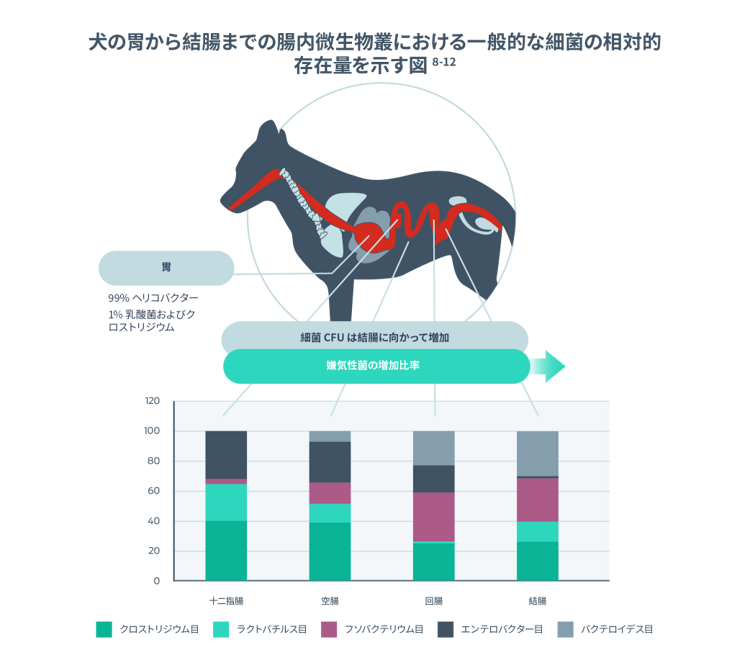
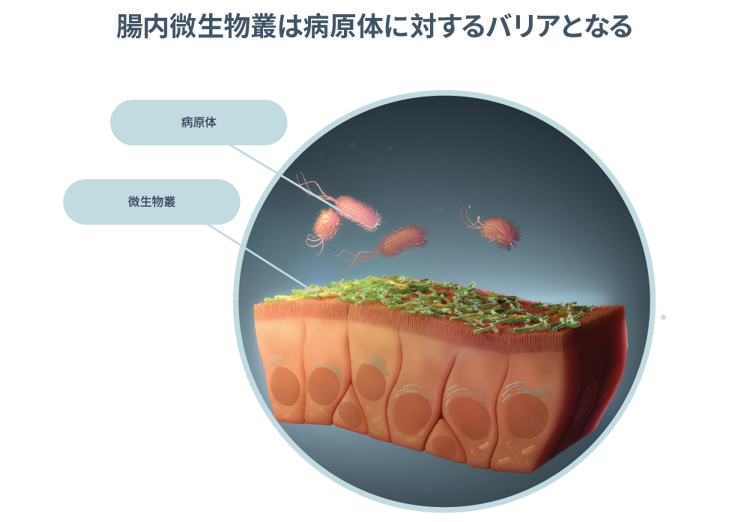
腸内微生物叢は、腸脳連関として知られる、腸と脳の間の双方向性相互作用の重要部分を成しています。5 さらに、微生物叢は皮膚 6、心臓、腎臓など、他の臓器の健康にも影響することを示す証拠が増えてきています。
微生物叢フォーラムの他の領域を見る


詳しく知る
- Richards, P., Thornberry, N. A., & Pinto, S. (2021). The gut-brain axis: Identification of new therapeutic approaches for Type 2 diabetes, obesity, and related disorders. Molecular Metabolism, 46, 101175. doi:10.1016/j.molmet.2021.101175
- Belas, A., Marques, C., & Pomba, C. (2020). The gut microbiome and antimicrobial resistance in companion animals. In Duarte, A. & Lopes da Costa, L. (Eds.), Advances in Animal Health, Medicine and Production (1st ed.), pp. 233–245. Springer International Publishing
- Blake, A. B. & Suchodolski, J. S. (2016). Importance of gut microbiota for the health and disease of dogs and cats. Animal Frontiers, 6(3), 37—42. doi:10.2527/af.2016-0032
- Sender, R., Fuchs, S., & Milo, R. (2016). Revised estimates for the number of human and bacteria cells in the body. PLoS Biology, 14(8):e1002533. doi:10.1371/journal.pbio.1002533
- Oriach, C. S., Robertson, R. C., Stanton, C., Cryan, J. F., & Dinan, T. G. (2016). Food for thought: The role of nutrition in the microbiota-gut-brain axis. Clinical Nutrition Experimental, 6, 25–38.
- van Splunter, M., Lui, L, Joost van Neerven, R. J., WIchers, H. J., Hettinga, K. A., & de Jong, N. W. (2020). Mechanisms underlying the skin-gut cross talk in the development of IgE-mediated food allergy. Nutrients, 12, 3830. doi:10.3390/nu12123830
- Summers, S. C., Quimby, J. M., Isaiah, A., Suchodolski, J. S., Lunghoger, P. J., & Gustafson, D. L. (2019). The fecal microbiome and serum concentrations of indoxyl sulfate and p-cresol sulfate in cats with chronic kidney disease. Journal of Veterinary Internal Medicine, 33(2), 662–669. doi:10.1111/jvim.15389
- Suchodolski, J. S., Camacho, J., & Steiner, J. M. (2008). Analysis of bacterial diversity in the canine duodenum, jejunum, ileum, and colon by comparative 16S rRNA gene analysis. FEMS Microbiology Ecology, 66, 567–578.
- Suchodolski, J. S. (2011). Microbes and gastrointestinal health of dogs and cats. Journal of Animal Science, 89, 1520—1530. doi:10.2527/ jas.2010.3377
- Suchodolski, J.S. (2011). Intestinal microbiota of dogs and cats: a bigger world than we thought. Veterinary Clinics of North America Small Animal Practice, 41, 261—272. doi:10.1016/j. cvsm.2010.12.006
- Suchodolski, J.S. (2012). “Microbiota in health and disease.” Nestlé Purina Companion Animal Nutrition Summit, Lisbon, Portugal, pp. 33–37.
- Honneffer, J. B., Steiner, J. M., Lidbury, J. A., & Suchodolski, J. S. (2017). Variation of the microbiota and metabolome along the canine gastrointestinal tract. Metabolomics, 12, 26. doi:10.1007/s11306-017-1165-3